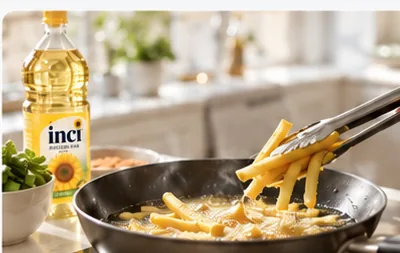

This article offers general information to support kitchen decisions. Always follow the latest instructions on the package for product-specific usage and storage.
Choosing the right storage place, keeping the cap closed and following the packaging instructions are key to storing cooking oils.
How to Choose the Right Storage Spot
Keeping cooking oil on the counter may be convenient, but conditions differ across the kitchen. Bottles near a window, on a sunny shelf or beside the hob or oven can be exposed to light and changes in temperature throughout the day. Unless the label says otherwise, a cool, dry cupboard away from direct sunlight may be a better choice.
Placement inside the cupboard matters too. Set the bottle upright on a stable, flat surface. Keep it away from cleaning chemicals and places where heavy utensils might fall on it, and choose a safe spot out of children's reach.
Why Is Closing the Cap Important?
Closing the cap tightly after each use limits unnecessary exposure to air and moisture. If you transfer oil to another vessel, it should be clean, dry and suitable for food contact. Keeping the original container also helps preserve date and batch information.
With larger containers, avoid leaving the cap off for long when pouring smaller amounts. Keep the spout and cap area clean and prevent food particles or water from entering the container.
How to Track an Opened Product
The date on the packaging is not the same as the day you opened the bottle. Consider the printed dates and any special instructions for use after opening. If you use the bottle infrequently, noting the opening date on a small label may be helpful.
If you notice an unusual smell, appearance or taste, do not keep using the oil solely because the printed date has not passed. Contact the manufacturer through official channels if you have concerns about product safety.
Storing Larger Containers
Choosing a size that matches your household's consumption makes storage easier. A large container needs a space where it fits comfortably, stands upright and can be opened and closed safely. Check that the cap is secure when carrying a handled container.
If you have several bottles, consider using older purchases first according to their individual dates. Keeping different oils separate and their labels visible helps prevent choosing the wrong product.
Common Small Storage Mistakes
Leaving the bottle behind the hob, closing the cap loosely or transferring the oil after removing its label may seem minor, but these habits deserve attention. When choosing storage, consider light and heat sources as well as kitchen layout.
General advice does not replace product labels. For İnci products, follow the storage conditions printed on the package and check any special guidance for different products or containers.
Rather than storing oil wherever you use it most, choose a place protected from direct light and high heat to maintain a more practical kitchen routine over time.
Editorial note: This article provides general kitchen information. For product-specific values and usage conditions, check the latest label.