
This article offers general information to support kitchen decisions. Always follow the latest instructions on the package for product-specific usage and storage.
Preparing ingredients, monitoring the oil and planning what to do after cooking helps make frying safer and more manageable.
Finish preparations before turning on the stove
Rushing while frying can lead to small mishaps. Wash and cut potatoes, courgettes or aubergines first, then dry their surfaces with a clean cloth or paper towel. Wet food can cause hot oil to splatter. Keep prepared ingredients near the stove but safely away from the flame.
Have the pan, tongs and plate for cooked food ready in advance. If deep-frying in a pot, do not fill it to the brim; leave room for oil and ingredients to rise without overflowing. Cooking food in manageable batches is generally easier than preparing an overcrowded pan.
Why does controlling the heat matter?
Adding food before the oil is sufficiently hot may leave it in the oil longer than intended. Excessive heat, on the other hand, can brown the outside quickly while leaving the inside undercooked. Follow the heat range suitable for your chosen recipe and use an appropriate kitchen thermometer if available.
Visible smoke rising from oil is not a normal sign of frying. Carefully reduce or switch off the heat and assess the pan. Never pour water onto burning oil; put your safety first and seek emergency assistance if needed. Never leave a pan of hot oil unattended.
What should you check when adding food to the pan?
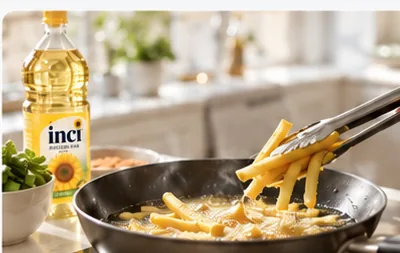
Lower food gently into the oil using tongs or a slotted spoon rather than dropping it from a height. Putting too much food in at once changes cooking conditions, can cause pieces to stick together and makes turning them more difficult. Fry similarly sized pieces together when possible.
Use a long-handled, heat-resistant utensil to turn the pieces. Watch their colour and texture instead of stirring them continuously. You can remove each piece as it finishes rather than waiting for everything to cook at once.
Serving and draining excess oil
Lift fried food out with a slotted spoon and let excess oil drip away. You can then place it briefly in a suitable strainer or on paper towels. Stacking hot food in a closed container traps steam and may soften its crisp texture.
Keep food awaiting service in accordance with food-safety guidance. Do not start cleaning until the frying oil has cooled. Wait until the equipment is at a safe temperature to reduce the risk of splashes and burns.
What should you do with used oil?
The condition of frying oil varies after each use. If the oil has darkened, developed a strong smell, excessive foam or smoke, do not consider it suitable for reuse. There is no single safe reuse count for every oil: the product, temperature, food and previous cooking conditions all matter.
After it has cooled, collect oil for disposal in a suitable leakproof container. Do not pour it down the sink or into the environment. Check your local used cooking oil collection arrangements and hand it in appropriately.
Frying results depend not only on the type of oil but also on moisture in the ingredients, how full the pan is, cooking time and the equipment used.
Editorial note: This article provides general kitchen information. For product-specific values and usage conditions, check the latest label.


